
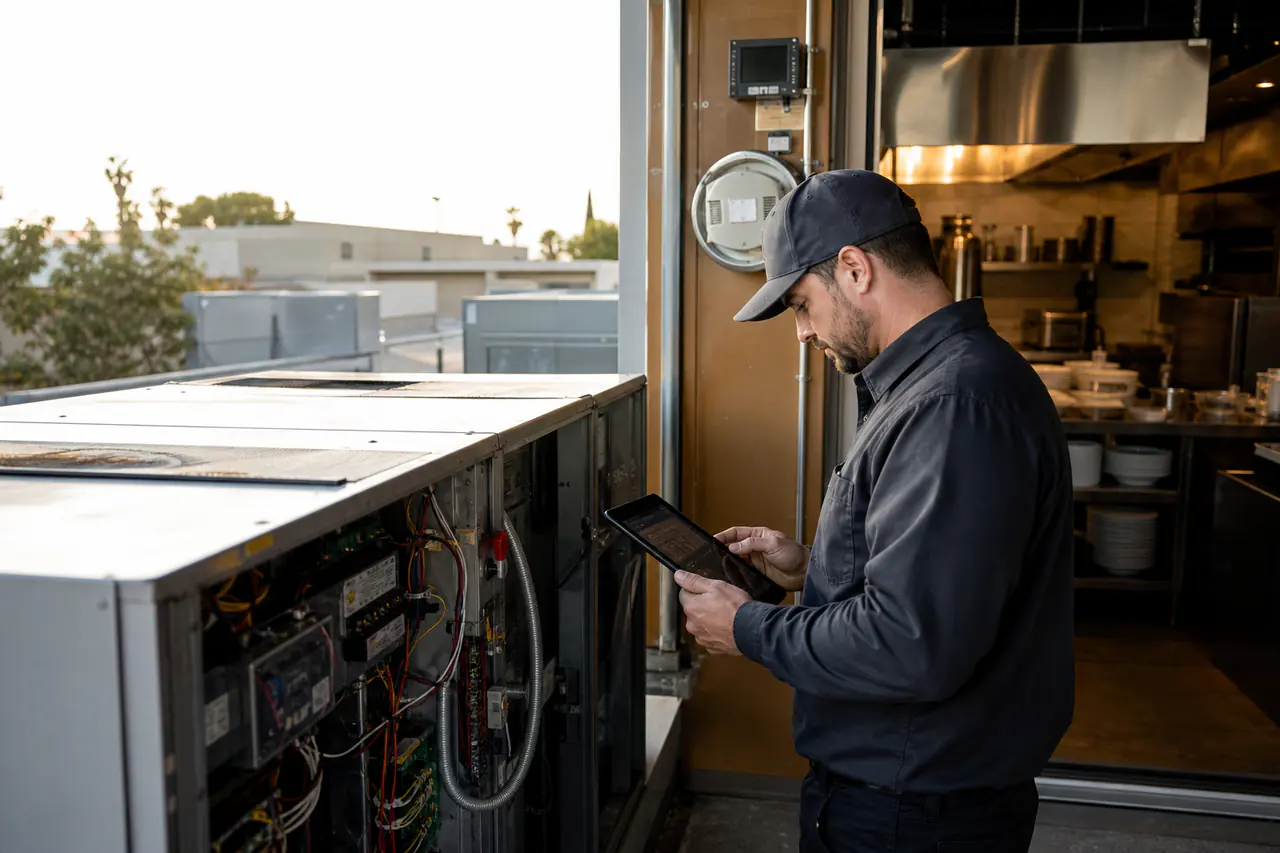
Controls Service & Repair
Building Automation & Controls Service
What is happening?
Give us the short version and we will route it to the right technician. Need to send drawings or a longer history? Use the full service request form.
What we service
Issues we are called out for
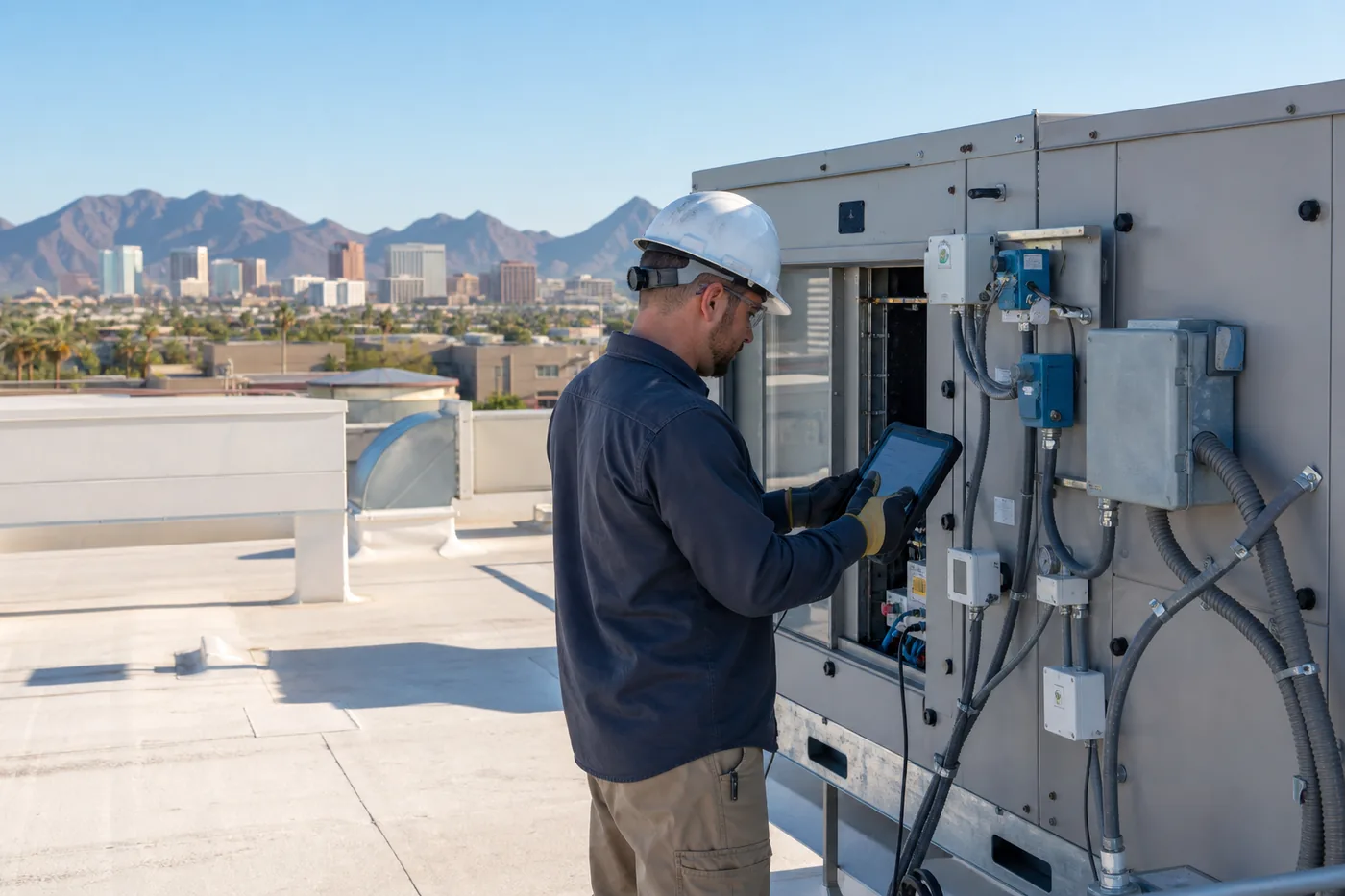
- BAS alarms and communication failures
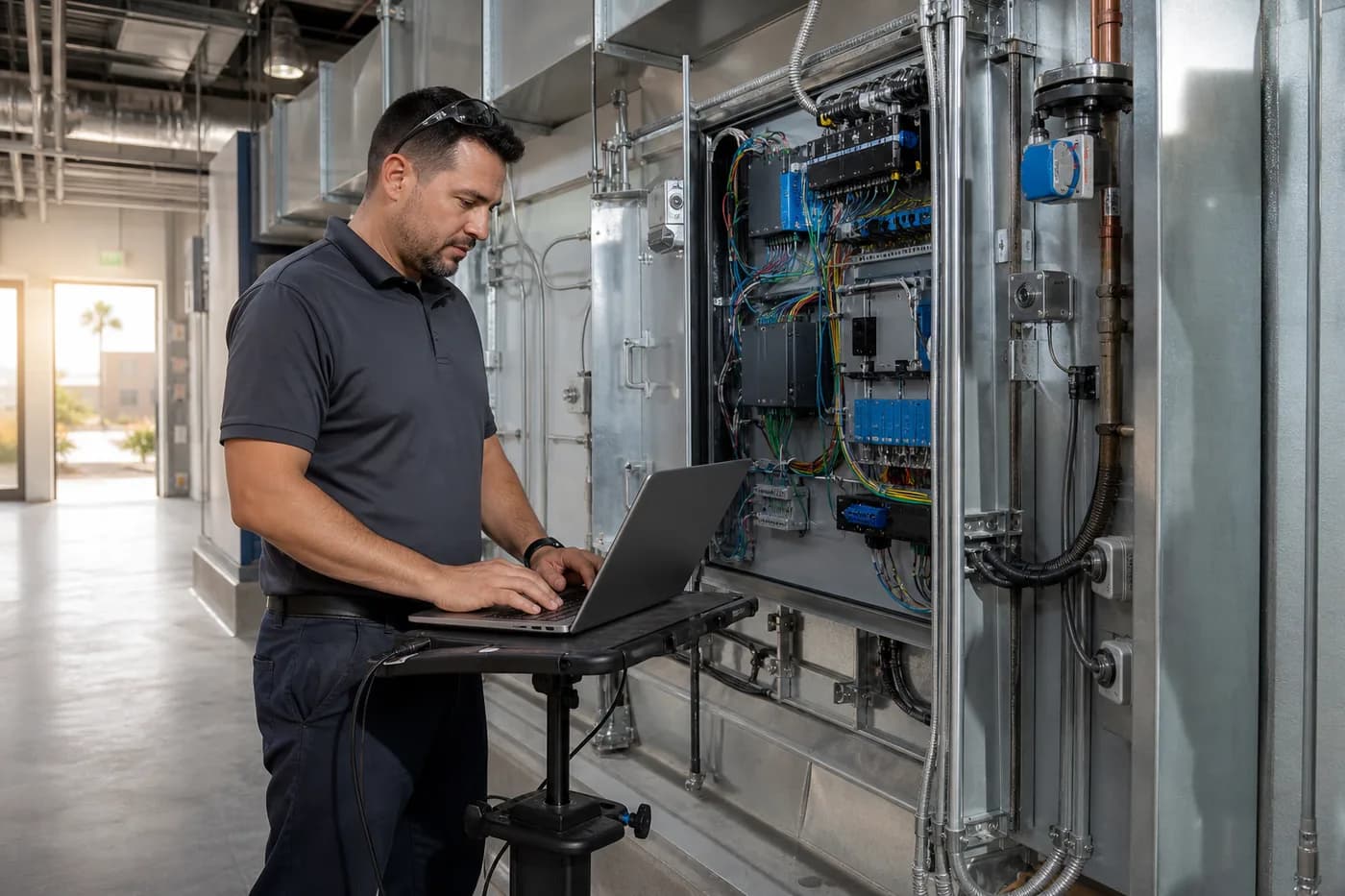
- Controller, sensor and actuator troubleshooting
- Network issues across BACnet and Modbus trunks
- Failed graphics or missing points
- Sequence problems and unexpected equipment behaviour
- Comfort complaints tied to controls rather than capacity
- Scheduling issues after occupancy or tenant changes
- Remote-access issues
- VFD and equipment integration faults
- Legacy controls troubleshooting
- Lighting controls faults, zones and schedule problems
- Software and database support where we hold the required access
Diagnostics
How we work a controls problem
Confirm the symptom
What is actually being observed, where, and when. A "too cold" complaint and a "cold at 6am only" complaint are different problems.
Check the data before the hardware
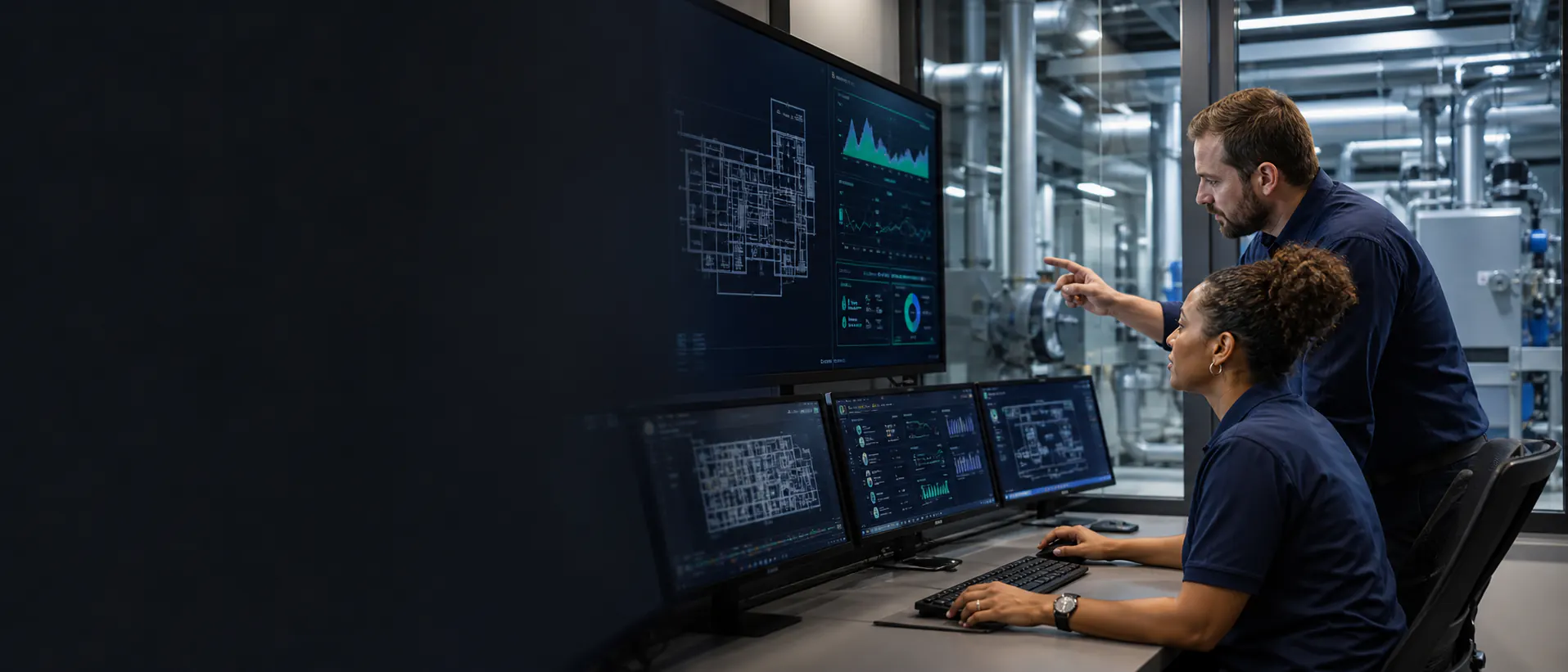
Trends, alarm history and current point values. The system usually already recorded what happened.
Verify the point is true
Compare the reported value against reality at the device. A large share of "sequence problems" are a sensor reading the wrong thing.
Check for overrides and manual commands
Points left in manual after a previous service call are one of the most common causes we find.
Test the sequence, not the theory
Drive the system through the affected mode and observe. Assumptions about what the logic does get verified here.
Correct and re-test
The fix is applied, then the original condition is re-created to confirm it is actually resolved.
Report what was found
A written record of the symptom, root cause, correction and any recommendation — so the same call is not repeated in six months.
Common findings
What these calls usually turn out to be
What you’re seeing
Half the building lost communication with the BAS.
How we approach it
Usually a network segment issue: a failed repeater, a device dragging down an MS/TP trunk, a duplicate address after a controller swap, or a switch port change made by IT.
What you’re seeing
One zone has been in reheat since last spring.
How we approach it
Typically a minimum airflow set too high for the current load, a failed damper actuator, or a zone sensor reading several degrees off.
What you’re seeing
Alarms flood the console every morning.
How we approach it
Alarm delays and deadbands that do not account for startup transients. The equipment is fine; the alarm strategy is not.
What you’re seeing
A schedule change did not take effect.
How we approach it
A local override at the controller, a holiday calendar entry, or a schedule written at the wrong level of the hierarchy so a higher priority is winning.
What you’re seeing
Graphics show points that no longer exist.
How we approach it
Controller replaced without updating the database or the graphics. The screen is showing a stale object reference.
What you’re seeing
Equipment runs at night despite an unoccupied schedule.
How we approach it
An after-hours override with no timeout, a tenant override button wired to the wrong point, or optimal start pulling equipment on far earlier than intended.
Ongoing support
Service agreements and preventive maintenance
Reactive service keeps a building running. Planned service keeps it from degrading in the first place — sensors verified before they drift far enough to matter, schedules reviewed against the current calendar, overrides cleared, database backups taken, and trends reviewed by someone who knows what to look for.
Agreement scope, coverage hours and inclusions are set per facility. Talk to us about what your building actually needs rather than fitting it to a tier.
Questions
Frequently asked questions
Related capabilities
- Building Automation Service PhoenixPhoenix-area BAS service
- Controls Retrofits & BAS UpgradesWhen repair stops making sense
- Building Automation SystemsSystem-level context
- Commercial HVAC ControlsEquipment-level sequences
- Commercial Lighting ControlsLighting controls service
- Energy ManagementRuntime and schedule review
- All Controls ServicesEverything we deliver
Next step