
Commercial HVAC Controls
Commercial HVAC Controls
- RTU
- AHU
- VAV
- DOAS
- Chillers
- Boilers
- VRF
- VFDs
- Hydronic
Our approach
Controls applied to real equipment — not a separate IT layer
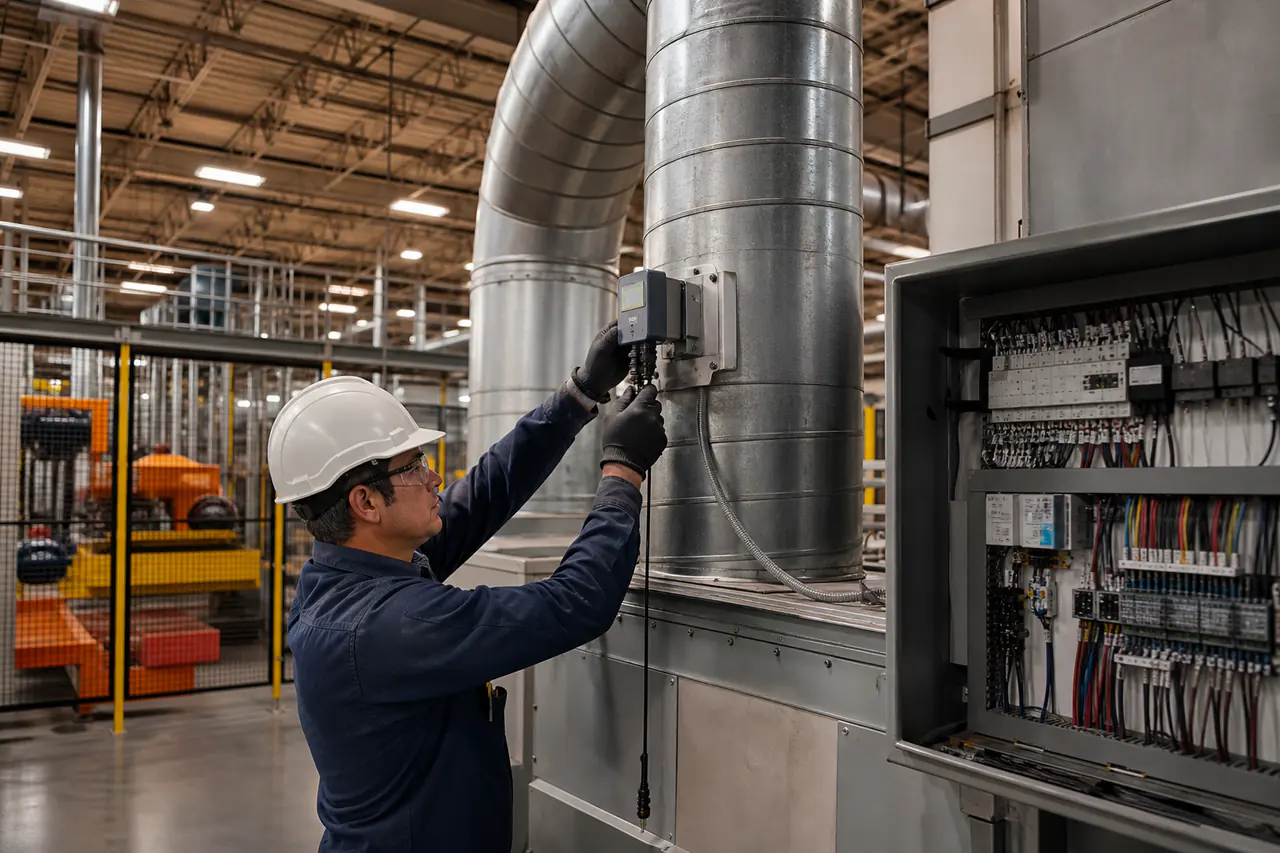
A lot of controls work goes wrong because the logic was written by someone who never looked at the equipment it commands. A reset schedule that ignores coil capacity, an economizer sequence that fights the mechanical cooling, a VAV box that has been in reheat since the day it was commissioned — these are not programming bugs. They are mechanical misunderstandings expressed in software.
We approach HVAC controls from the equipment side first. What is the system supposed to do, what limits does it actually have, what safeties must never be defeated, and how will someone prove it is working six months from now. The sequence follows from that.
Equipment & sequences
What we control
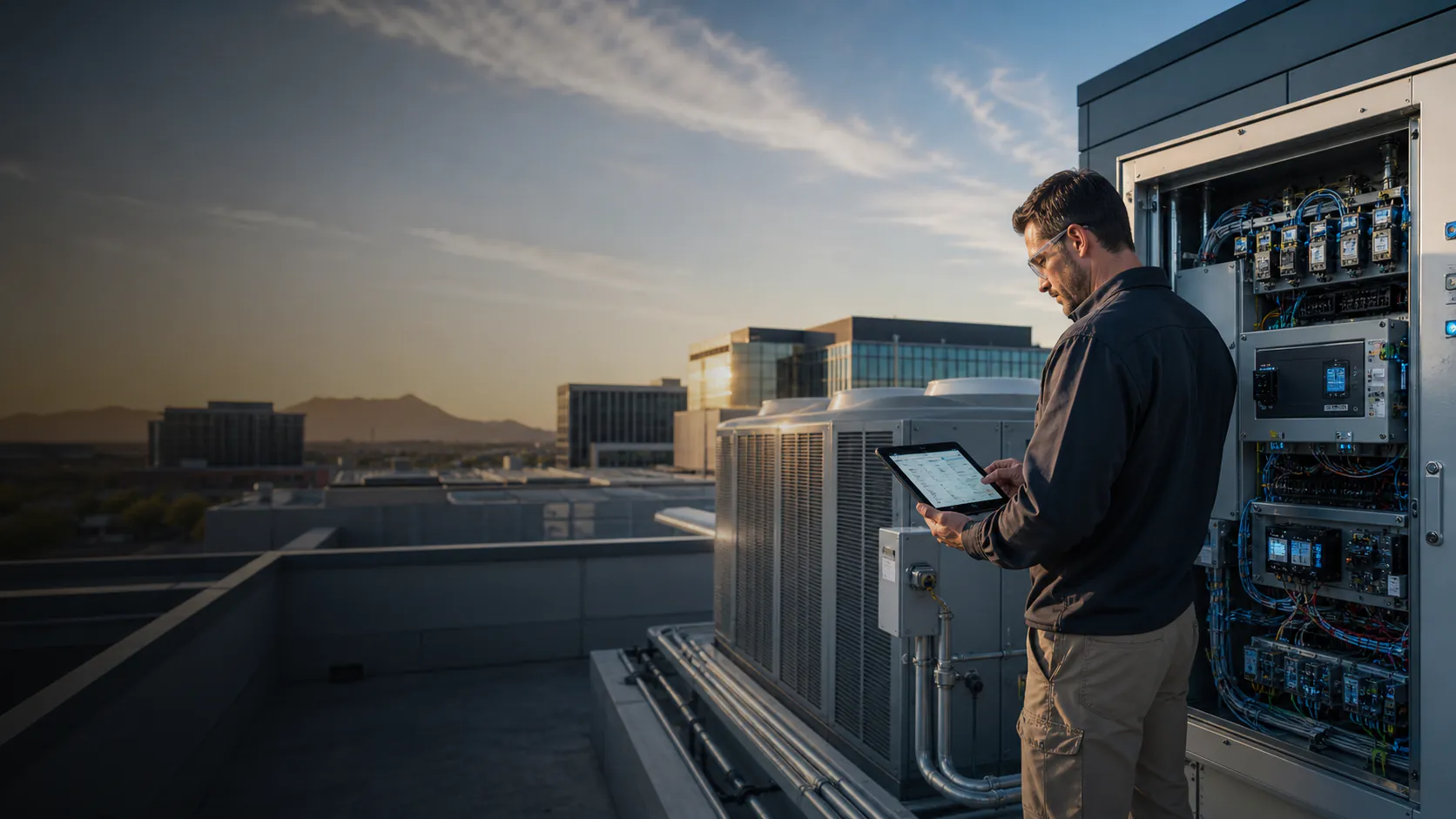
- RTU control and economizer sequences
- AHU and mixed-air control
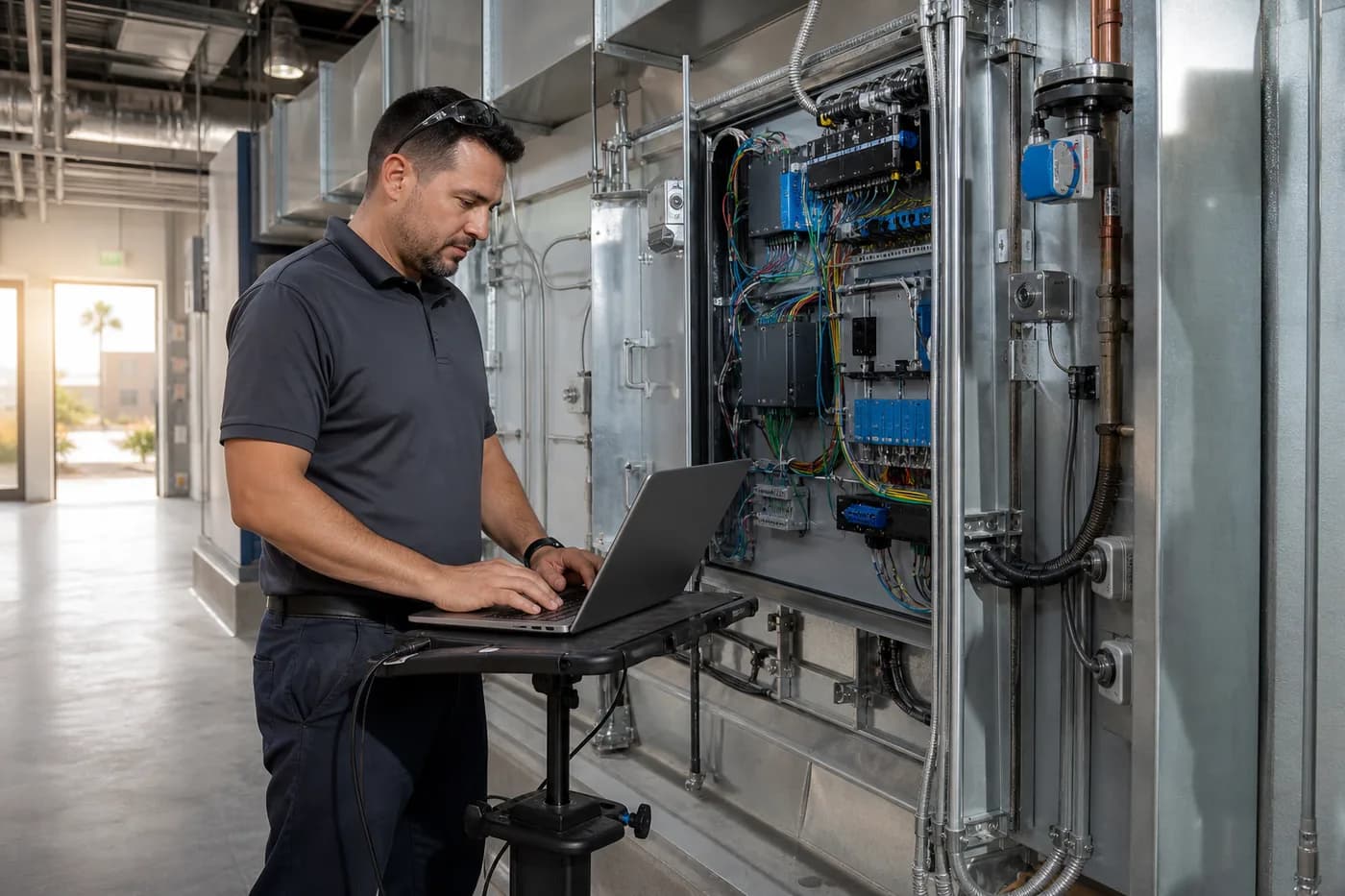
- VAV terminal control, including reheat and minimum airflow
- DOAS control for temperature, humidity and ventilation
- Chiller and boiler plant control and staging
- Hydronic pump and differential-pressure control
- VRF integration where a supported interface exists
- VFD control, speed limits and optimization
- Exhaust and make-up air interlocks
- Humidity, pressure, temperature, CO₂ and IAQ control
- Occupancy detection and scheduling strategies
- Freeze protection, safeties, alarms and proof-of-operation
Sequence work
The parts of a sequence that decide whether it works
Setpoints & resets
Supply-air, static-pressure, hot-water and chilled-water resets tuned to the equipment and the load, with limits that prevent the reset from chasing a single problem zone.
Safeties & interlocks
Freezestats, high-static cutouts, smoke-detector interlocks and equipment proof handled as hard safeties, never as software conveniences.
Occupancy & scheduling
Occupied, unoccupied, warm-up and after-hours modes that match how the building is genuinely used, including tenant override behaviour.
Staging & rotation
Plant and fan staging with minimum runtimes, lead-lag rotation and anti-short-cycle protection, so the equipment lasts as long as it should.
Alarming
A short list of alarms that mean something, with priorities and delays that stop the nuisance flood everyone eventually learns to ignore.
Trending
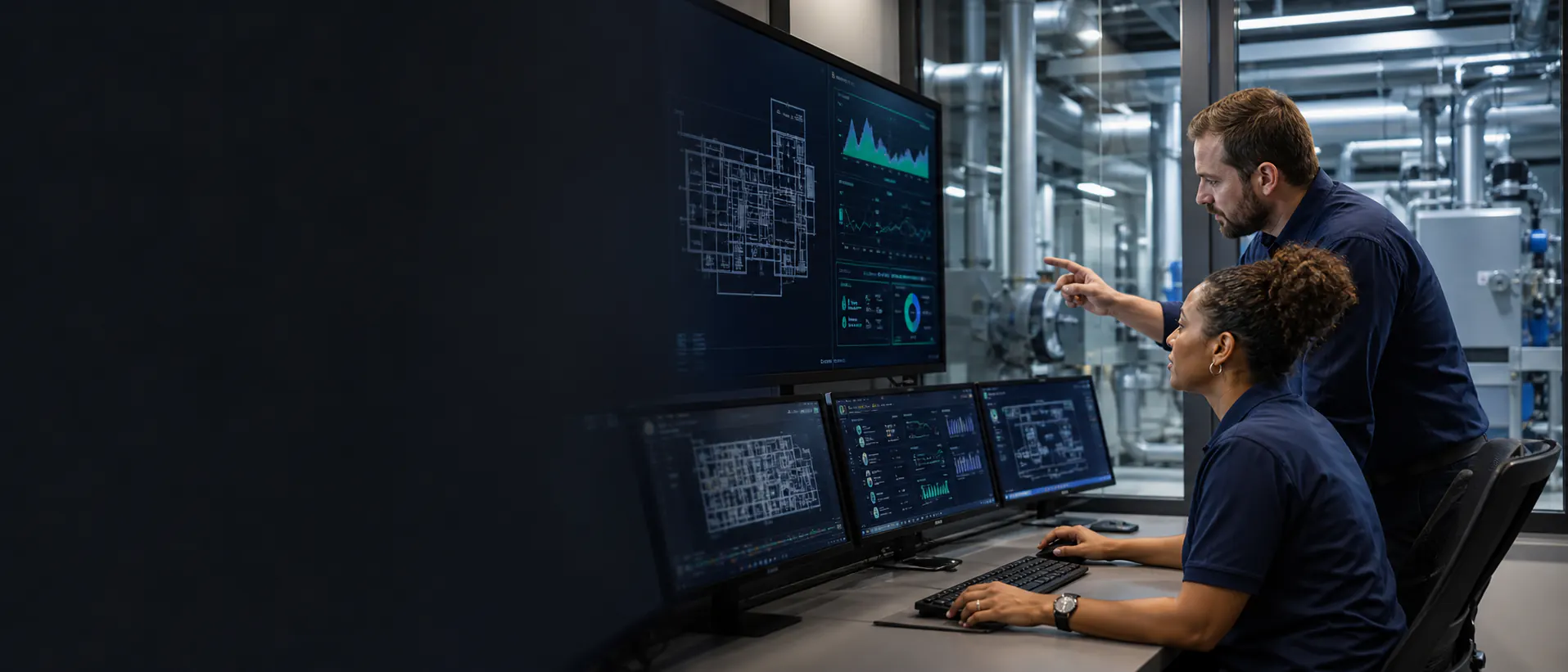
Point selection and intervals chosen so that when something goes wrong, the data needed to diagnose it already exists.
Symptoms
What owners usually describe when they call
What you’re seeing
One area is always too hot or too cold, and nobody can find why.
How we approach it
We trend the zone, the terminal unit and the air handler together. Most of these resolve to a stuck damper, a failed sensor, a minimum airflow set too high, or a reset that starves the zone.
What you’re seeing
Equipment runs overnight and on weekends when the building is empty.
How we approach it
We audit schedules, holiday calendars, override timers and any points left in manual. After-hours runtime is usually the fastest measurable win in a building.
What you’re seeing
The economizer never seems to open, or opens at the wrong time.
How we approach it
We verify the outdoor-air sensor, changeover strategy and damper linkage, then re-test the sequence across the actual operating range instead of trusting the setpoint.
What you’re seeing
Alarms come in constantly, so the staff stopped reading them.
How we approach it
We rebuild the alarm strategy — priorities, delays, deadbands and routing — so that an alarm means action is required.
What you’re seeing
Points show values that clearly are not real.
How we approach it
Sensor calibration and reasonableness checks across the affected system, then correction of any scaling or I/O mapping errors in the database.
What you’re seeing
The chiller or boiler plant short-cycles.
How we approach it
We review staging thresholds, minimum runtimes, flow proof and the reset strategy driving the load, then re-stage the plant around real conditions.
Questions
Frequently asked questions
Related capabilities
- Building Automation SystemsThe supervisory layer above the equipment
- Controls Engineering & ProgrammingSequences, points lists and logic
- Controls CommissioningFunctional performance testing
- Controls Service & RepairTroubleshooting and diagnostics
- Energy ManagementResets, staging and runtime reduction
- Controls Retrofits & BAS UpgradesReplacing obsolete controls
- All Controls ServicesThe full service line
Next step